Spiritual Counseling for Muslims Who Feel Lost, Disconnected, or Stuck
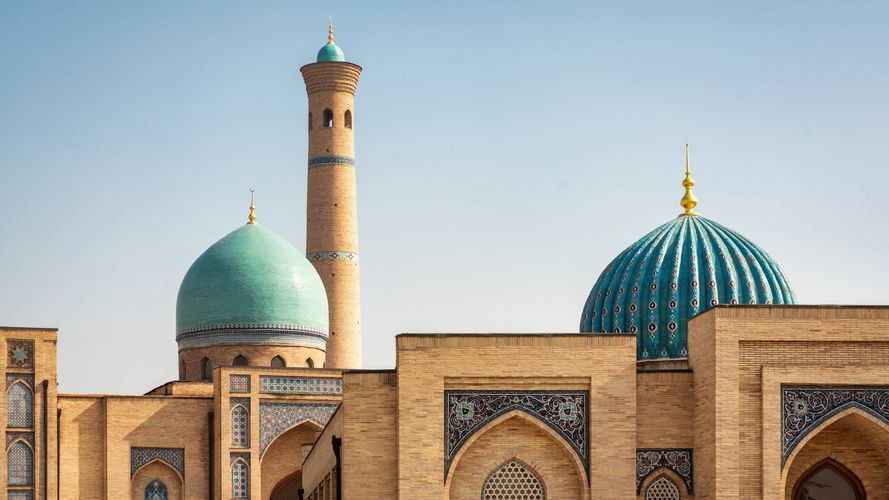
Find peace and purpose through faith-based counseling services.
Find peace and purpose through faith-based counseling services.
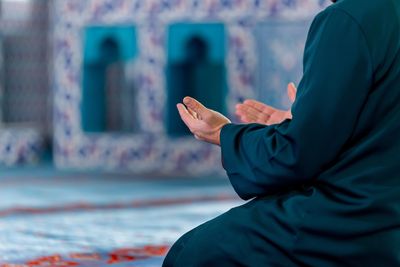
“I can talk to people, but I don't feel like anyone really knows me.”
“I keep worrying about the future.”
“I don't feel spiritually connected.”
“I don't fit neatly anywhere.”
“Something happened in my religious upbringing that still affects me"
Sometimes the hardest part of asking for support is having to explain where you're coming from.
Explaining your family. Explaining your faith. Explaining why certain expectations feel heavy. Explaining the difference between what you believe, what you were taught, and what you actually feel.
You shouldn't have to spend your entire session explaining the context before you can talk about what you're experiencing.
You can talk about the parts of your life that feel complicated, even when they don't fit neatly together.
Maybe you feel deeply connected to your faith in some ways and distant from it in others. Maybe you're carrying expectations from your family or community that you don't know how to navigate. Maybe your religious upbringing left you with questions, hurt, anger, or confusion that you haven't known where to take.
Your culture, faith, family, and community can all shape how you understand yourself and the world around you. We recognize that these experiences can be deeply meaningful—and sometimes complicated.
Our approach makes room for your individual relationship with Islam, your values, your questions, and your lived experience. You don't need to defend your faith, prove your faith, or have your beliefs figured out before you begin.
There may be things you've never felt comfortable saying out loud.
Questions you worry might disappoint someone. Feelings you were taught not to have. Anger toward people or institutions you were taught to respect. Doubts you don't know how to make sense of.
The goal isn't to tell you what you should believe or how you should live.
It's to help you understand yourself more clearly, work through what you're carrying, and move toward a life that feels more authentic and meaningful to you.
"And among His signs is that He created for you mates from among yourselves that you may find tranquility in them, and He placed between you affection and mercy."
— Qur'an 30:21
Marriage is one of Allah's greatest blessings, built upon sakinah (tranquility), mawaddah (love), and rahmah (mercy). While every marriage experiences seasons of joy and growth, it is also natural to encounter periods of misunderstanding, conflict, and emotional distance.
If you and your spouse are struggling, you are not alone. Many Muslim couples face challenges that can feel overwhelming. Seeking support is not a sign of failure—it is an act of courage and a commitment to preserving what Allah has entrusted to you.
Our approach is practical, compassionate, and grounded in Islamic values. We gently guide couples through miscommunication, unmet expectations, and recurring conflict by helping them develop effective communication skills, increase understanding, and identify realistic, workable solutions. Our goal is to strengthen relationships whenever possible and help couples move forward with greater clarity, compassion, and confidence.
We specialize in supporting Muslim couples experiencing relationship distress, including:
Every couple's story is unique. We provide a respectful, culturally responsive space that honors Islamic principles while recognizing the complexities of modern relationships (including interfaith/intra-faith).
Sometimes spouses find themselves in different places—one partner is considering divorce while the other hopes to preserve the marriage. Discernment Counseling is a structured, short-term process (typically 1–5 sessions) designed specifically for these "mixed-agenda" couples.
The purpose is not to convince either spouse to stay or leave. Rather, it is to help both partners gain clarity, understand the factors that have brought them to this point, and thoughtfully determine whether reconciliation is possible, in shā' Allāh, or whether separation is the healthiest path forward.
Islam regards marriage as a sacred covenant and the foundation of a healthy family and community. At the same time, our faith recognizes that some marriages may become harmful or no longer fulfill their purpose.
Divorce is permitted in Islam when sincere efforts toward reconciliation—including communication, personal change, and mediation—have been exhausted. Circumstances such as abuse, neglect, persistent unresolved conflict, or irreconcilable differences may make separation the most appropriate course.
While divorce is considered a last resort, it is not viewed as a failure. We approach both reconciliation and separation with rahmah (compassion), dignity, and respect, supporting individuals and couples through whichever path they ultimately choose.